
Call us now :08045815486
 Send Inquiry
 Send Inquiry
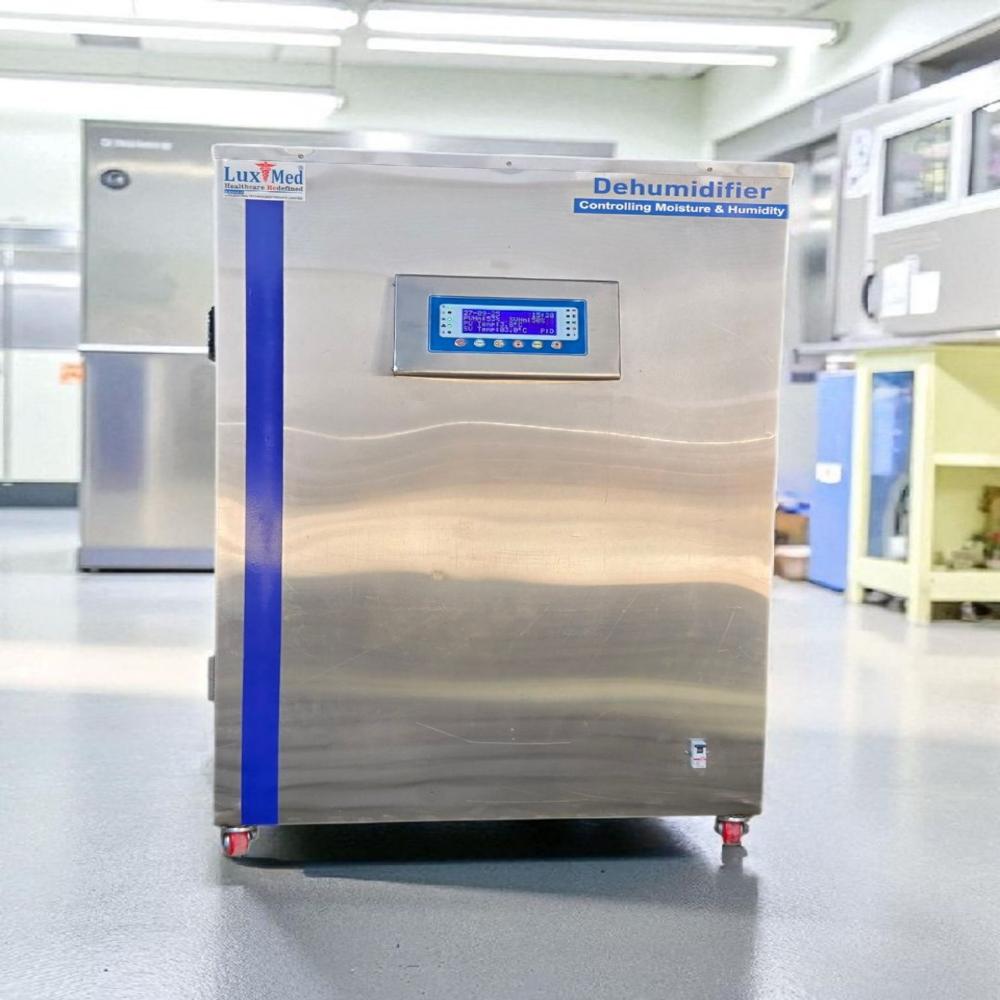
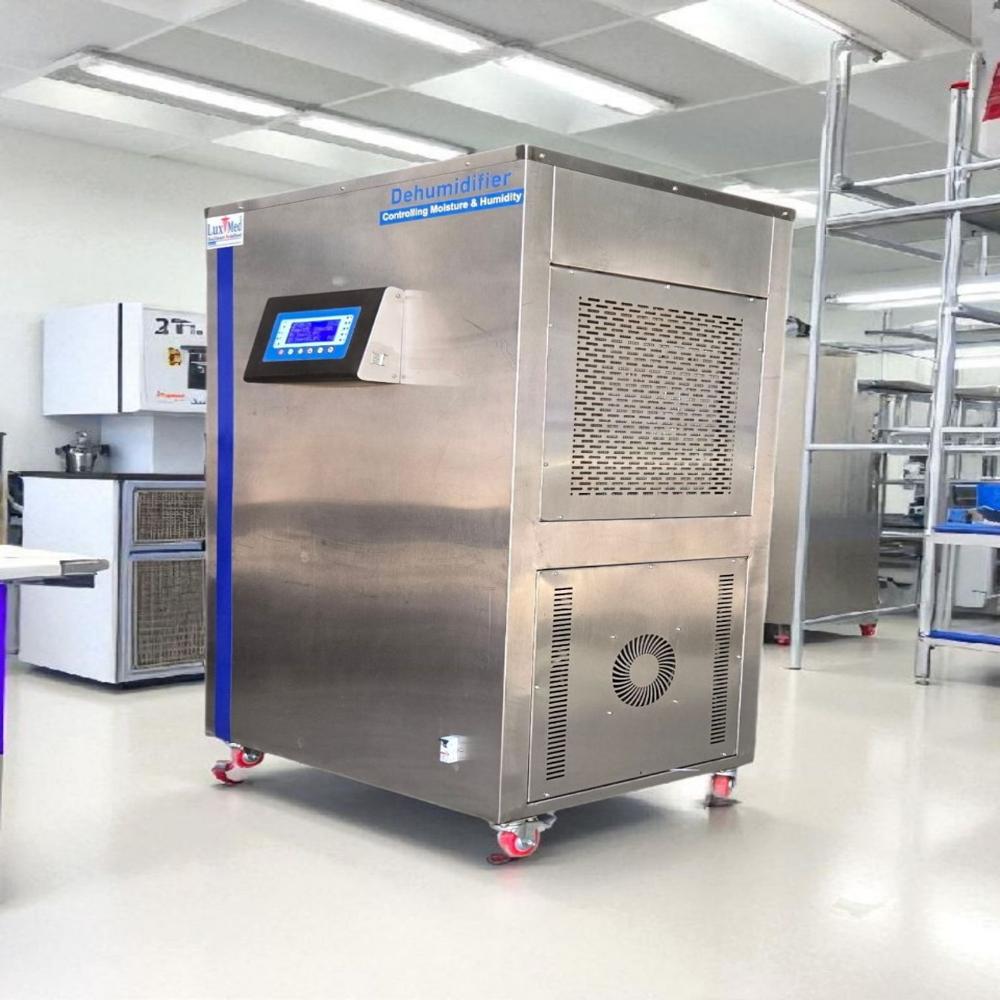
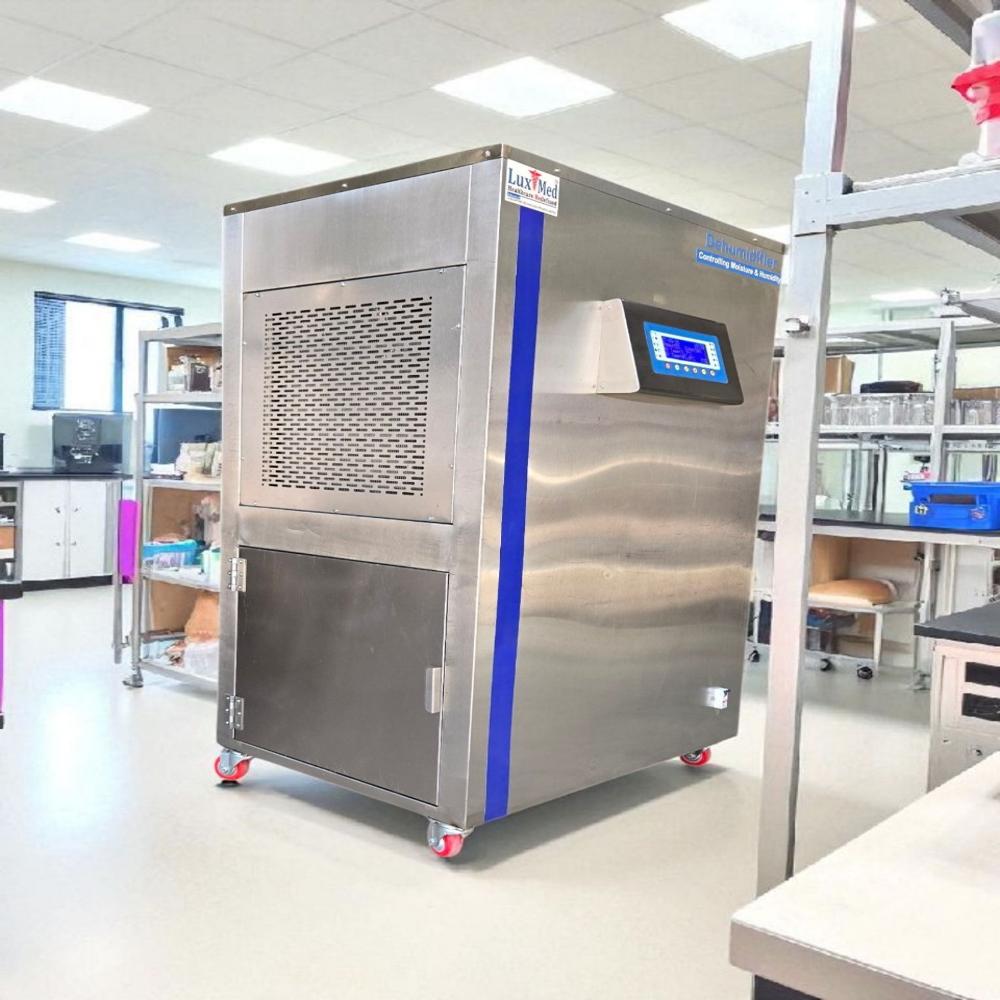
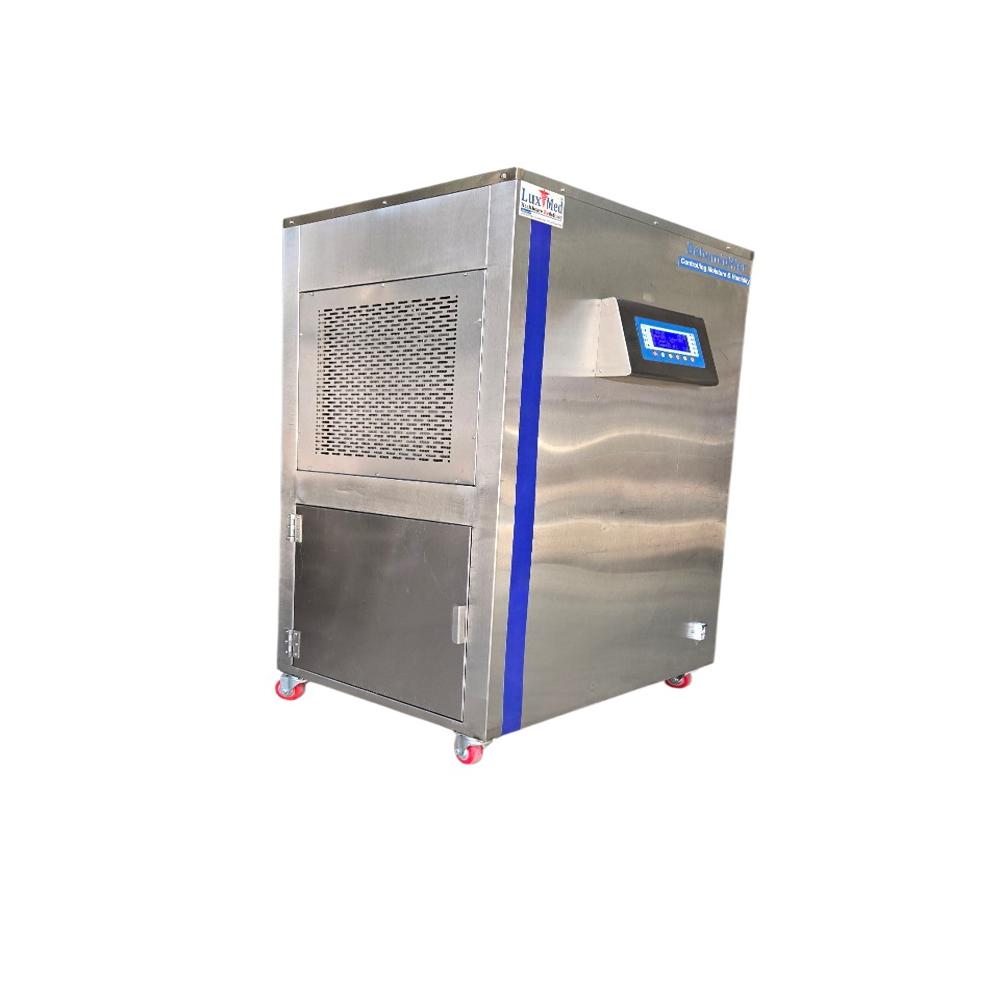
LuxMed Dehumidifer Refrigerated
Price 180000.0 INR/ Unit
MOQ : 1 Number
LuxMed Dehumidifer Refrigerated Specification
- Dimension (L*W*H)
- 21.5*20.5*39 Inch (in)
- Height
- 39 Inch (in)
- Weight
- 60 Kilograms (kg)
- Color
- Grey
- Length
- 21.5 Inch (in)
- Width
- 20.5 Inch (in)
- Power
- 440/220 Volt (v)
- Material
- SS 304/ GI
LuxMed Dehumidifer Refrigerated Trade Information
- Minimum Order Quantity
- 1 Number
- Delivery Time
- 2 Week
About LuxMed Dehumidifer Refrigerated
LuxMed Dehumidifiers are usedto reduce and maintain humidity levels in the air, primarily to prevent mold, mildew, and other moisture-related problems.They work by drawing in humid air, cooling it to condense the moisture, and then releasing drier air.
LuxMed Dehumidifiers , Refrigerant (or compressor) Dehumidifiers, moisture removed from Air
Dehumidified air is released from a dehumidifier into a space, having had moisture removed by passing over cool coils or a desiccant material, which then condenses the water and collects it.The process involves a fan drawing in moist air, moving it over a drying mechanism to remove water, and then expelling the drier air.This dry air is often slightly warmer than the air that entered the unit.
How Dehumidifiers Work
Dehumidifiers use one of two primary methods to remove moisture from the air:
- Refrigerant Dehumidifiers:
These are the most common type and use cold coils, similar to an air conditioner.
- Air Intake:A fan pulls humid air into the unit.
- Condensation:The air passes over cold coils that are below the dew point temperature, causing the water vapor to condense into liquid.
- Discharge:The condensed water is collected.The air, now dry and slightly heated by the process, is then released back into the room.
The Purpose of Dehumidified Air
- Comfort:
Dehumidified air helps maintain a healthy and comfortable indoor environment, ideally between 40% and 60% relative humidity.
- Health:
Reducing humidity prevents the growth of mold, mildew, and dust mites, which can be harmful allergens.
- Protection:
It prevents damage to belongings such as electronics, wooden furniture, books, and clothing from excessive moisture.
Here's a more detailed look at how and why they are used:
- Preventing Mold and Mildew:
High humidity can lead to mold and mildew growth, which can be a health hazard and damage property.Dehumidifiers remove excess moisture, making it difficult for these organisms to thrive.
- Reducing Condensation:
Dehumidifiers can help prevent condensation on windows, walls, and other surfaces, especially in areas like basements and crawl spaces.
- Improving Comfort:
High humidity can make a room feel stuffy and uncomfortable.Dehumidifiers can make the air feel cooler and more comfortable.
- Reducing Musty Odors:
Mold and mildew growth can cause musty smells.By removing moisture, dehumidifiers can help eliminate these odors.
- Protecting Property:
Excess moisture can damage furniture, flooring, and other items in your home.Dehumidifiers can help prevent this damage.
- Relieving Allergy Symptoms:
Dehumidifiers can help reduce the growth of dust mites, which can trigger allergies.
- Helping with Breathing Issues:
Some people with asthma or respiratory problems find that a dehumidifier helps ease breathing by reducing the amount of moisture in the air.
- Drying Laundry:
Some dehumidifiers have a drying feature that can be used to quickly dry clothes.
When to use a dehumidifier:
- When the humidity level in your home is above 55%.
- If you experience condensation on windows, walls, or other surfaces.
- If you have a basement, crawl space, or other area prone to dampness.
- If you have mold or mildew problems.
- If you have allergies or respiratory problems.
- If you are trying to dry clothes quickly.
How to use a dehumidifier:
- Place the dehumidifier in a well-ventilated area, ideally with good air circulation.
- Close all doors and windows while running the dehumidifier to prevent outside moisture from entering the room.
- Ensure the dehumidifier is placed on a level surface and away from any obstructions.
- Empty the water collection tank regularly to ensure the dehumidifier continues to operate effectively.
Dehumidifier design principle
Dehumidifiers design primarily uses the principle ofcooling and condensation to remove moisture from the air.This involves drawing in humid air, cooling it to below its dew point, causing water vapor to condense, and then either collecting or draining away the condensed water.The cooled, dehumidified air is then reheated and returned to the space.
Here's a more detailed look at the design principle:
- Air Intake:A fan draws in humid air from the surrounding environment.
- Cooling Coils:The air passes over cold coils (evaporator) where it's cooled.
- Condensation:As the air cools, the water vapor in it condenses into liquid water, forming droplets on the coils.
- Moisture Collection:The condensed water (condensate) is collected in a reservoir or drained away through a hose.
- Reheating:The cooled, dehumidified air is then typically reheated using the heat released during the cooling process, and returned to the room.
- Cycle Repetition:The entire cycle of air intake, cooling, condensation, moisture collection, and reheating continues until the desired humidity level is reached.
In essence, dehumidifiers design leverages the physics of air and water, where cooling air below its dew point forces water vapor to condense, and the resulting moisture is removed from the air stream..
Refrigerant dehumidifiers and desiccant dehumidifiers are two main types of dehumidifiers, each with unique advantages and disadvantages.Refrigerant dehumidifiers are more efficient in warm, humid environments and can quickly remove moisture.Desiccant dehumidifiers excel in cooler, drier environments and can achieve very low humidity levels.
Refrigerant Dehumidifiers:
- How they work:
They use a refrigerant to cool the air, causing water vapor to condense and be collected.
- Advantages:
- Efficient in warm, humid conditions.
- Quick moisture removal.
- Relatively inexpensive to operate in suitable conditions.
- Disadvantages:
- Less effective in cold environments.
- May not be suitable for extremely low humidity requirements.
- Common applications:
Home use, commercial and industrial applications where moisture needs to be reduced quickly.
Desiccant Dehumidifiers:
- How they work:
They use a desiccant material to absorb moisture from the air.
- Advantages:
- Effective in cold and dry environments.
- Can achieve very low humidity levels.
- Can be used in environments where ventilation is limited.
- Disadvantages:
- More energy-intensive than refrigerant dehumidifiers in suitable conditions.
- Can be more expensive to operate and maintain.
- May not be suitable for very humid environments.
- Common applications:
Pharmaceutical and petrochemical industries, cold storage, and applications requiring very low humidity levels.
Choosing the Right Type:
The best type of dehumidifier depends on the specific needs and conditions of the application.Consider factors such as:
- Temperature:Refrigerant dehumidifiers are better for warmer environments, while desiccant dehumidifiers are better for cooler environments.
- Humidity level:Desiccant dehumidifiers can achieve lower humidity levels than refrigerant dehumidifiers.
- Energy consumption:Refrigerant dehumidifiers are generally more energy-efficient in suitable conditions.
- Noise levels:Desiccant dehumidifiers tend to be quieter than refrigerant dehumidifiers.
- Cost:Both types have different initial and operating costs.
Tell us about your requirement

Price:
Quantity
Select Unit
- 50
- 100
- 200
- 250
- 500
- 1000+
Additional detail
Mobile number
Email

More Products in Climatic Condition And Stability Chamber, Ultralow Category
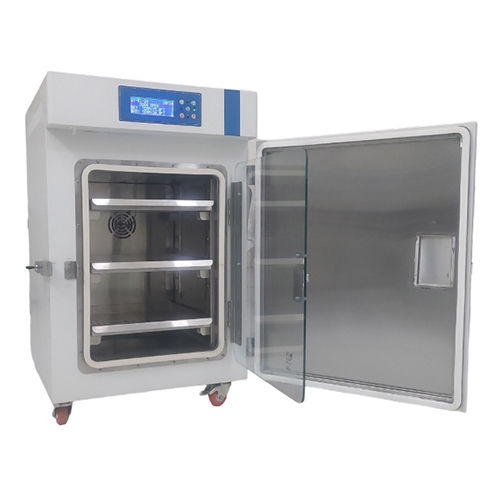
Grow And Maintain Microbiological Incubator
Price 70000.0 INR / Unit
Minimum Order Quantity : 1 Unit
Material : SS
Color : Silver
Usage : Industrial
Product Type : Microbiological Incubator

LuxMed Lyophilizer Freeze Dryer
Price 400000.0 INR / Unit
Minimum Order Quantity : 1 Number
Material : SS
Color : Silver
Usage : Industrial
Product Type : Freeze Dryer
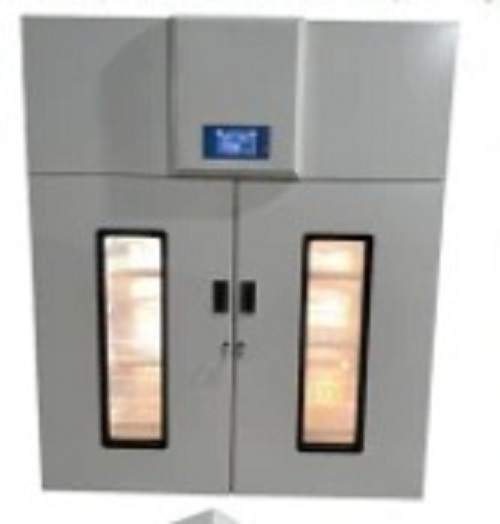
Plant Growth Chamber
Price 550000.0 INR / Unit
Minimum Order Quantity : 1 Number
Material : SS
Color : Green & White
Usage : Industrial
Product Type : Plant Growth Chamber
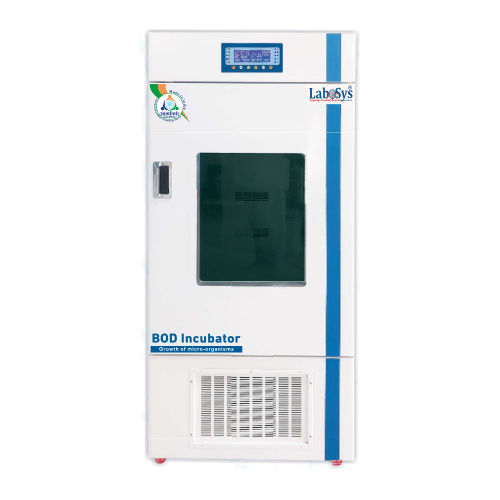
LMX-B100 BOD Incubator
Price 225000.0 INR / Unit
Minimum Order Quantity : 1 Number
Material : SS
Color : White
Usage : Industrial
Product Type : Bod Incubator

 Send Inquiry
Our Products


B 232, Ground Floor, Khasra No. 832, Chattarpur Extension,New Delhi - 110074, India

Mr Suraj Kumar
(CTO)
Mobile :08045815486
 Send Inquiry
 Send SMS
Developed and Managed by Infocom Network Private Limited.
